What is Sulforaphane, and Why Do We Need it?
Updated: Jul 27
Sulforaphane is a powerful phytochemical with exceptional bioavailability, meaning our bodies absorb it more effectively than most other phytonutrients. It provides a wide range of health benefits, from cancer prevention to brain protection.
The Benefits of Sulforaphane
Cancer Prevention & Treatment
Sulforaphane plays a crucial role in fighting cancer. It can:
✅ Kill cancer cells and suppress tumor growth
✅ Induce apoptosis (programmed cell death)
✅ Reduce cancer cell multiplication
✅ Protect DNA from mutations that lead to cancer
Antioxidant & Anti-Inflammatory Effects
As an antioxidant, sulforaphane neutralizes free radicals, reducing oxidative stress and inflammation—both major contributors to chronic diseases.
Heart Health
It helps lower high blood pressure and reduces arterial inflammation, supporting overall cardiovascular health.
Liver Detox & Gut Health
Sulforaphane aids liver function and detoxification while also improving gut health by:
✅ Blocking harmful bacteria growth
✅ Reducing the risk of gastric ulcers and tumors
✅ Supporting a healthy gut microbiome and protecting against colon cancer
Brain Protection
Sulforaphane defends against neurodegenerative diseases like Parkinson’s and Alzheimer’s by protecting mitochondria and reducing brain inflammation.
How to Get Sulforaphane in Your Diet
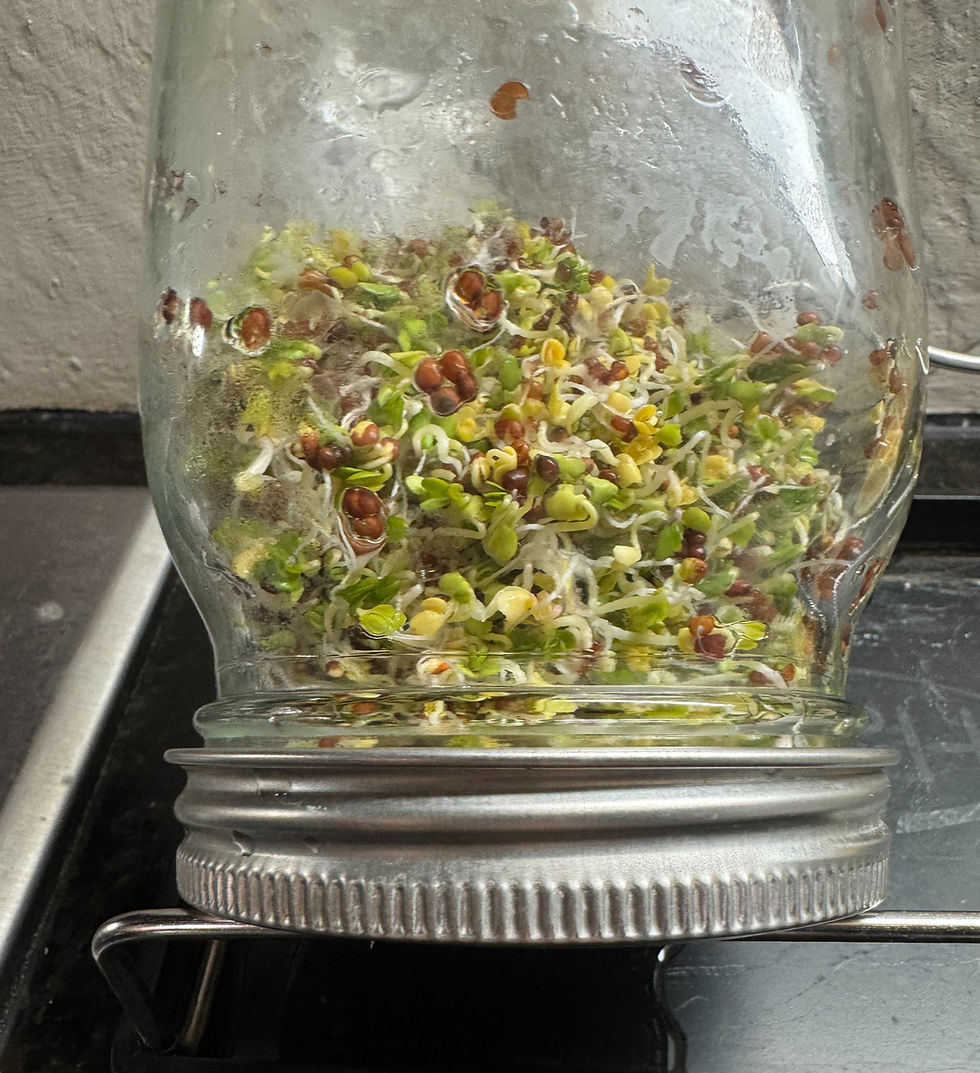
Broccoli Sprouts
While sulforaphane is found in cruciferous vegetables like broccoli, kale, and Brussels sprouts, broccoli sprouts contain up to 100x more sulforaphane per gram than mature broccoli!
They’re incredibly easy to grow at home:
Place broccoli seeds in a jar with a strainer lid.
Soak them in 1" of water overnight.
Rinse and drain every morning and evening.
In 5 days, you'll have fresh sprouts packed with sulforaphane!
Spread them out on a dry paper towel for an hour to dry.
Place them in an airtight container and store in the refrigerator for up to 1 week.
Here are links to the strainer jars and seeds we use:
You can add them to smoothies and salads or eat them plain.
💡 Important: The sulforaphane in sprouts is in an inactive form. It is activated when it is crushed, so be sure to chew them well or blend them into a smoothie.
Sulforaphane Supplements
If growing sprouts isn’t your thing, you can take a supplement. However, most contain very little sulforaphane. If you go this route, look for one with a high dose—at least 250 mg per serving. I’ve provided a link to a high quality supplement below.
Cost Comparison: Sprouts vs. Supplements
Option | Cost per Month | Sulforaphane per Day |
Growing Sprouts | ~$4 per person | ~350 mg |
Taking a Supplement | ~$60 per person | 250 mg |
We eat broccoli sprouts in our smoothies every day. We get more sulforaphane at a fraction of the cost.
Regardless of how you get it, adding sulforaphane to your diet can have a profound impact on your health. Whether through homegrown sprouts or a high-quality supplement, it’s worth making this phytochemical part of your daily routine.
Here is a link to a high quality supplement with 250 mg per serving:
Here are links to the strainer jars and seeds we use:


Comments